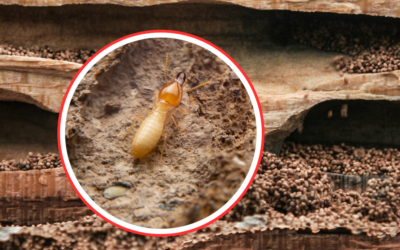
Here’s something most Houston homeowners don’t expect: the best time to treat drywood termites is usually when you can’t see them. By the time swarmers show up on a windowsill in April, the colony behind them may have been living in your walls, attic framing, or furniture for years. Drywood colonies can survive 10 to 15 years inside the wood, sending out new swarmers every season. What you see is the exit, not the infestation, and that’s exactly the problem whole-structure fumigation is built to solve.
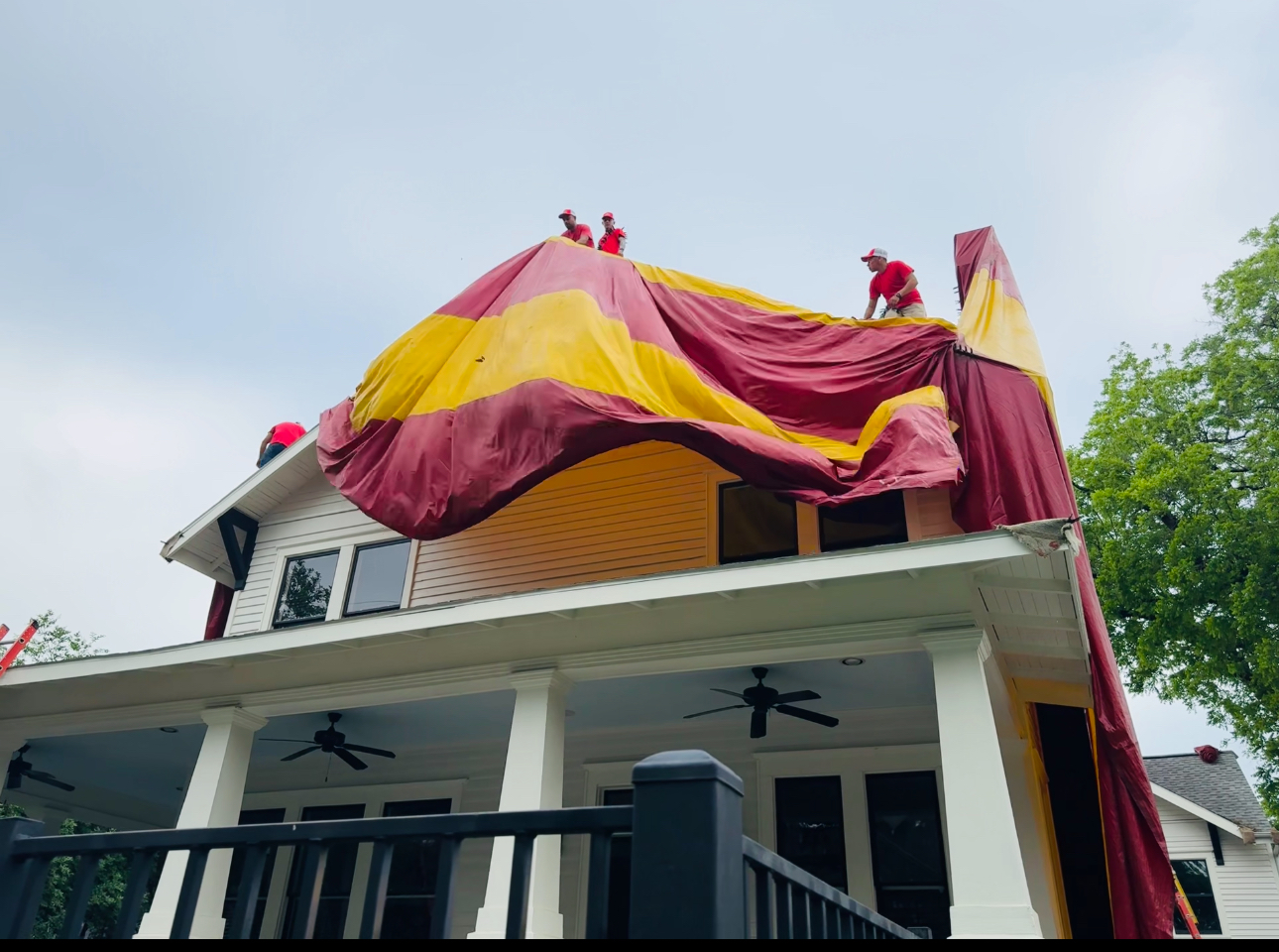
The short answer: Whole-structure fumigation, often called tent fumigation, seals a home under a tent and fills it with a gas fumigant that penetrates walls, framing, floors, and furniture to eliminate drywood termites and powderpost beetles throughout the structure. A Houston home needs it whenever there’s evidence of drywood termites, whether in one room or several.
What Does Whole-Structure Fumigation Actually Do?
Liquid and foam treatments work only where they’re applied. A gas doesn’t have that limit. It moves through cracks, voids, and the wood itself, reaching places a technician can’t: wall cavities, deep attic rafters, the space under hardwood floors, and built-in cabinetry.
Picture a 1920s bungalow in the Heights with original shiplap walls, a pier-and-beam foundation, and decades of paint layers. Drywood termites can tunnel through that framing without leaving a mark on the surface, so a colony in the wall behind the bathroom mirror could go undetected for years. Fumigation doesn’t depend on finding it.
Tent Fumigation Explained: How the Process Works
Tent fumigation follows a predictable sequence. First comes interior prep: people, pets, and plants leave, along with food, medications, cosmetics, and anything not in factory-sealed glass or metal. Next is exterior prep, which means creating about 12 inches of clearance around the structure so the tent can seal evenly against the ground. The crew then tents the home with coated tarps, clamps, and weighted sandbags, and a state-certified fumigator introduces the gas. When the exposure period is complete, the tent comes down, and the home aerates before clearance testing begins.
Here’s how that plays out on a typical drywood termite job: the house is tented Monday, the fumigant stays in place for roughly 18 to 20 hours, and the tent comes off Tuesday. After aeration and testing, the family is back home on Wednesday. Larger structures and heavier infestations can take longer, and you’ll get a job-specific estimate before any work begins.
Fumigation vs. Spot Treatment: Why the Difference Matters
Spot treatment, such as drilling and injecting a termiticide into a damaged window frame, only treats the wood it reaches. The trouble is that drywood termites rarely stay in one spot. A colony that has been active for a few years has likely produced swarmers that started new colonies elsewhere in the home.
Say a homeowner finds a small pile of pellets under a dining room window and has the frame treated locally. The pellets stop. Two springs later, swarmers appear in an upstairs bedroom, coming from a separate attic colony that was never treated. That isn’t a failed treatment. It’s a treatment that was only designed to reach one colony. Whole-structure fumigation is designed to reach every colony in the structure at the same time.
When Does a Houston Home Need Whole-Structure Fumigation?
Coastal Fumigators recommends fumigation whenever there’s evidence of drywood termites, whether it’s in one room or several. Signs to watch for include:
Drywood termite pellets (frass), especially small piles beneath windowsills, baseboards, or furniture
Swarmers or discarded wings indoors, especially near windows and light fixtures
An inspection that finds active drywood termites or powderpost beetles
Hollow-sounding wood, blistered paint, or tiny round exit holes in hardwood floors, trim, or furniture
Activity that returned after a spot treatment
Take a couple under contract on a Montrose home whose inspection finds active drywood termites in a back bedroom. One fumigation treats the entire home before closing, including any colonies the inspection couldn’t reach, and the transferable warranty goes with the home to the new owners.
Powderpost beetles leave a different calling card: pinhole-sized exit holes and fine, flour-like powder beneath hardwood floors, antique furniture, or exposed beams. By the time those signs appear, the beetles have usually spread beyond what anyone can see, and fumigation treats the whole structure at once.
Fumigation targets pests that live inside the wood. Subterranean termites live in the soil and need a different approach.
Is Tent Fumigation Safe for My Home and Belongings?
Yes, when it’s performed by licensed professionals and prep instructions are followed. The fumigant leaves no residue, so dishes, utensils, clothing, and counters don’t need to be washed when you return, and it won’t affect paint, finishes, or fabrics. A guard monitors the site from tenting through tent removal and the completion of active aeration.
Before any family is cleared to return, a state-certified fumigator checks the home with instruments that detect fumigant in parts per million, testing voids like attic spaces and wall cavities, not just open rooms. Only when every reading is zero do “Safe for Entry” signs go up at each entrance. That night, the family can cook with the same pots and plates that stayed in the kitchen the whole time.
Key Takeaways
- Whole-structure fumigation treats every colony in the house at once, including the ones no one can see.
- Coastal recommends fumigation whenever there’s evidence of drywood termites, whether in one room or several.
- Most Houston homes are ready to re-enter in about two nights.
- The fumigant leaves no residue, and no one re-enters until testing clears the home.
Your Next Step: Schedule a Free Inspection
If you’ve noticed pellets, wings, or unexplained wood damage, schedule a free inspection to confirm what’s active and whether whole-structure fumigation is the right fit. Coastal Fumigators has served the Greater Houston area since 1986 and backs every fumigation, for both drywood termites and powderpost beetles, with a 100% Elimination guarantee and a transferable one-year warranty. We also offer Service Now, Pay Later financing through Wisetack.
Call (713) 862-8224 or book your free inspection online.
Frequently Asked Questions
How long do I have to be out of my house for tent fumigation? Most drywood termite fumigations mean about two nights away. The tent typically stays up 18 to 20 hours, then the home aerates and is tested before you’re cleared to return. Larger homes or heavier infestations can take longer.
How much does whole-structure fumigation cost in Houston? Cost is based on the size and construction of your home, so we provide an estimate after a free inspection. Service Now, Pay Later financing is available through Wisetack.
Does fumigation prevent termites from coming back? Fumigation eliminates the pests present at the time of treatment, but it doesn’t leave a residual barrier. That’s why Coastal Fumigators backs its fumigations with a transferable one-year warranty that can be renewed annually.
Do I need to remove my clothes and dishes before fumigation? No. Clothing, dishes, and utensils can stay. You’ll remove food, medications, cosmetics, and anything not in factory-sealed glass or metal, plus people, pets, and plants. You’ll receive complete interior and exterior prep checklists in your Service Agreement Packet.
Can I fumigate just one room? No. Structural fumigation works by sealing the entire building so the gas reaches every part of it. Even if termites are found in only one room, fumigating the whole structure also reaches colonies that haven’t shown signs yet.
Does tent fumigation kill subterranean termites? Fumigation targets pests living inside the wood, like drywood termites and powderpost beetles. Subterranean termites nest in the soil and need a different treatment approach.